Today, I am answering more questions that you have asked starting with making coffins. Yes, it is hard when making a coffin for someone especially a child or someone young. It is sad, but then we must look at the other side of the passing as their time is done on this earth. We hope that they are with the Lord in a better world.
Someone else asked if the casket is placed in the ground without a vault? No, when the coffin is made, a wooden vault is also made. The casket is lowered into the wooden vault. We do not look at the casket or vault as protection. Our Bishop says at the funeral: "Remember man that thou art dust and unto dust you shall return." That is why, after the Bishop prays, we all put a hand full of dirt on top of the vault to remind us of from where we came and where our physical body will go. We do not try to preserve or protect what it is in the ground. It is our soul we are most concerned about not our body.
How do the caskets get taken to the cemetery at a funeral? Some of the Amish and Old Order Mennonites have a buggy just for that. You can open the back and slide the coffin in and slide it back out at the cemetery. Some use a open back wagon but today most of us have a funeral parlor car hearse to lead with the casket and we follow in our horse and buggies.
Someone asked about an interview with Joseph and myself about their roles in church leadership. I don't know what you mean. Do you mean what we do? How the church is ruled?
You know what really upsets me is the novels out that make the Bishop sound like a terrible person. They make the Bishop sound like if he lifted his hand lightening would strike. That he is a mean heartless person.
Each Bishop is a human being just like we are and like all humans have a different personalities.
The Bishop's job is to help people not make their lives miserable. People are not to be afraid when the Bishop shows up at their door. We hope that they are glad to see Joseph when he comes to their house not afraid of him. Usually they know Joseph is coming in advance because he calls first. Even when Joseph shows up, it does not mean it is church business. It could be school business, how someone is feeling if they are sick or just to say hello.
Now some Bishops are stricter than Joseph, but that is their personality. Some Bishops are not as strict as Joseph, but that it their personality. It is a big job to be Bishop and the Bishop needs help of all the people in our meetings. What he needs the most from people is prayer for God's guidance and wisdom so he knows how to handle the problems that come up.
I didn't mean to go on so, but after reading a couple novels and how mean the Bishop was, I got wondering if people believed what was written.
If all goes well, Elmer will be back next week. I hope I answered your questions. If you have more, please ask.
Be With the Lord,
Martha
NOTE: I GOT A CALL FROM JEAN THIS MORNING. SHE ASKED IF WE WERE GOING TO HAVE THE RECIPE A DAY FOR EASTER THAT WE HAD LAST YEAR. WOULD YOU LIKE THAT? ARE THERE ANY SPECIAL RECIPES YOU WOULD LIKE? LET ME KNOW SO I CAN TELL JEAN.
Monday, March 31, 2014
Sunday, March 30, 2014
SEVENTH DAY ADVENTIST CHURCH, EAST PALMYRA, NY
Seventh Day Adventist has services on Saturday rather than on Sunday. I wasn't able to get any history on this church. I do like the message that they have out front.
Saturday, March 29, 2014
Friday, March 28, 2014
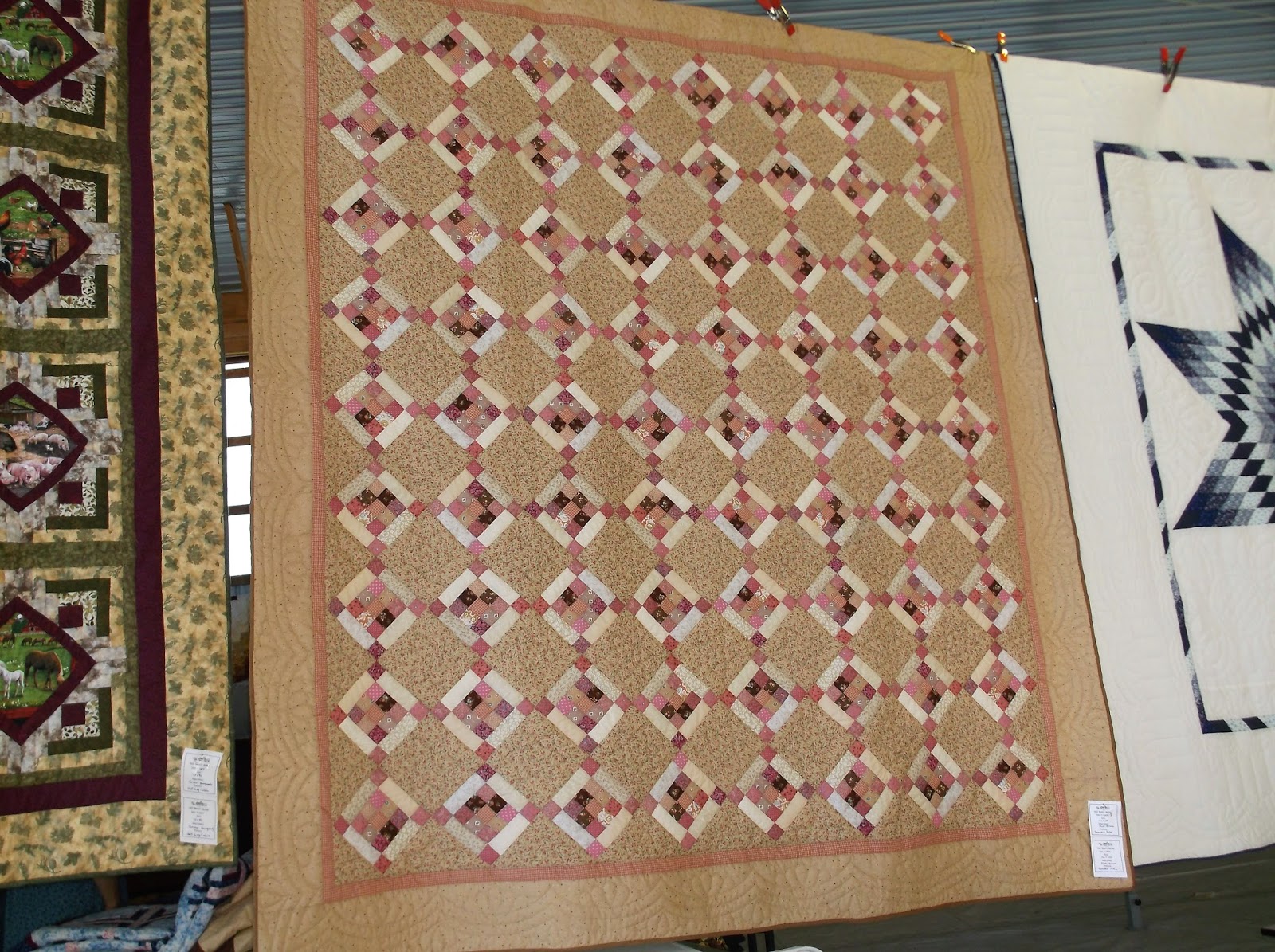
HAITI QUILT AUCTION - JUNE 15. 2013 - PART 2
This is the last of the Haiti Auction quilts that I took pictures on. Hope you have enjoyed them all. Tomorrow is the last of the items that they auctioned - no quilts in that one.
Thursday, March 27, 2014
HAITI AUCTION QUILTS - JUNE, 2013 - PART 1
As this is March and the next Haiti Auction is in June, I think I better clear the items from the last auction off. This is part 1 of the quilts. Part 2 will be tomorrow and on Saturday, I will have the last of the items on - not quilts.
Wednesday, March 26, 2014
MARTHA'S FISH AND CLAM CHOWDER
\\
MARTHA;S FISH AND CLAM CHOWDER
1 (16 oz) package frozen flounder, cod, or haddock, fillets
2 Tablespoon salad oil
1 medium green pepper, cut into thin stripes
1 small onion, diced
1 small garlic clove, minced
1 (16 oz) can tomatoes
1 (8 oz) bottle clam juice
1/4 tsp basil
1/8 tsp pepper
1 (10 oz) can while baby clams
Let frozen fish stand at room temperature for 10 minutes. Then cut into bite size pieces. Have 4 quart pan over medium heat. Add salad oil, cook green pepper, onion and garlic until tender, stirring occasionally. To vegetables add tomatoes with liquid, clam juice, basil, pepper and fish; over high heat, heat to boiling. Reduce to low, cover, simmer 10 minutes. Add clams with liquid, cook until clams are heated through and fish flakes easily when tested with fork.
NOTE: You may notice that I have taken off the Family Magazine button that led you to my ebay auctions. I have had problems with ebay and have taken all my items off of there. I have gone somewhere else to sell my items and when I have them on, I will see if I can get a button on here so you can go directly to my items. I am sorry for any inconvenience that I have caused.
Marilyn
MARTHA;S FISH AND CLAM CHOWDER
1 (16 oz) package frozen flounder, cod, or haddock, fillets
2 Tablespoon salad oil
1 medium green pepper, cut into thin stripes
1 small onion, diced
1 small garlic clove, minced
1 (16 oz) can tomatoes
1 (8 oz) bottle clam juice
1/4 tsp basil
1/8 tsp pepper
1 (10 oz) can while baby clams
Let frozen fish stand at room temperature for 10 minutes. Then cut into bite size pieces. Have 4 quart pan over medium heat. Add salad oil, cook green pepper, onion and garlic until tender, stirring occasionally. To vegetables add tomatoes with liquid, clam juice, basil, pepper and fish; over high heat, heat to boiling. Reduce to low, cover, simmer 10 minutes. Add clams with liquid, cook until clams are heated through and fish flakes easily when tested with fork.
NOTE: You may notice that I have taken off the Family Magazine button that led you to my ebay auctions. I have had problems with ebay and have taken all my items off of there. I have gone somewhere else to sell my items and when I have them on, I will see if I can get a button on here so you can go directly to my items. I am sorry for any inconvenience that I have caused.
Marilyn
Tuesday, March 25, 2014
JEAN'S GRANDMOTHER OLIVE TELLS US OF CANNING MEATS
Finally !!!!! I found my notes and am finally on here. I apologize for taking so long to get on here. Before I start, I am going to do canning meats. After speaking with Anna and getting her over her fear of computers, when I explained that you never touch or see one - she will do posts on curing and smoking meat.
When I first started canning meats, many years back, we did everything they tell us not to do today. We used the hot water method, used any old jars we had around the house that we could boil to put meat in and didn't have recipes in books like they had today. I learned from my mother who had learned it from her mother. If you have never canned meat before, I would suggest you buy a book on canning meat as I am sure, I am not going into every detail. They also might put it much plainer that I am. When I am doing it I remember better than when I am telling it.
But times have changed and so have I. So we will start from the beginning. First off be careful of the meat your purchase or shoot. Make sure the meat is fresh, no mold, bacteria, and more. If you purchase meat from a store, it should have a U.S. inspection stamp on it. If you are purchasing from a farmer, either know the farm you are buying it from or at least check the meat to make sure it does not smell, look bad, etc. When in doubt, throw it out.
If you shoot an animal say a deer, bird or catch a fish - also check it out. You may have to contact a vet or have a grocery butcher check it out. You don't want food poisoning.
When you get the meat keep it in the refrigerator between 40 and 32 degrees- as close to 32 as you can without freezing it, if you are going to can it in a day or two. If it will be longer than that before you can it, freeze it and defrost it in the refrigerator.
Now, what items will you need to do canning. What I am telling you to use are what I use today - not what I used years ago. You will need a pressure canner. You don't have to buy the best, but make sure it can heat to 240 degrees. It must have a stop that will heat right and has a petcock so it will let out steam for about 10 minutes at the start of the canning process. A pressure gauge or dial should be on the top to indicate the pressure along with a safety valve to release excess steam in case it accidentally reaches the danger point. You will also need a rack in the bottom of the pressure canner to place the jars on. If you are buying a new pressure canner, there should be a jar rack with it - but check to make sure. You will also need a Bimetallic-coil thermometer to make sure you cook the meat, poultry and fish to the proper temperature. Also you should get a litter that allows you to move the hot jars - which leads to you needing canning jars.
Glass jars should have a metal band that screws on the jar, metal done lid with sealing compound on underside, and jar. I like the jars with the wider tops so you can get meat in when filling the jars without any problems. Also the wider jars make it easier to get the meat out of them when you open the jars to get the meat out. Like canning vegetables, fruits, etc. make sure your jars sealed when you take them out of the pressure canner. Do not use the rubber seals again. After you have used them and opened the jar, toss them and use new ones next you can. Also make sure there aren't any chips, scratches, etc. on the jars before you use them. If they are not sealed and you are not going to eat the meat immediately, then throw them out.
Here are some rules to go by:
1. Read the directions and make sure you understand how to use the pressure canner - even if you have used it before. Use the pressure canner just as the directions say.
2. Make sure the meat is fresh without mold, bad color, etc.
3. Keep your work area clean at all times.
4. Don't use any shortcuts.
5. Use all instructions for cooling and storing the canned meat.
6. Make sure the jars have a perfect seal.
7. Make sure your equipment is working before you start.
8. Make sure there isn't any spoilage before opening jars.
9. Reheat all meat before using it.
10. Remember the temperature of 240 degrees.
11. If you are following a recipe - follow it to the letter.
Pounds of Meat per Quart Jar
Beef round 3-3 1/2 pounds
Beef rump 5-5 1/2 pounds
Pork Loin 5-5 1/2 pounds
Chicken Canned with bone 3-4 1/2 pounds
Chicken Caned without bone 5 1/2 - 6 1/2 pounds
I don't mean to scare anyone, but I want to make sure that you do it correctly so there is no food poisoning. Canning meat can save you money. Also, we use all the parts of the animal that we can.
In the next post, I will start with canning of beef. They are two ways you can: hot pack and raw pack, which I will go into next week.
Follow God,
Olive
When I first started canning meats, many years back, we did everything they tell us not to do today. We used the hot water method, used any old jars we had around the house that we could boil to put meat in and didn't have recipes in books like they had today. I learned from my mother who had learned it from her mother. If you have never canned meat before, I would suggest you buy a book on canning meat as I am sure, I am not going into every detail. They also might put it much plainer that I am. When I am doing it I remember better than when I am telling it.
But times have changed and so have I. So we will start from the beginning. First off be careful of the meat your purchase or shoot. Make sure the meat is fresh, no mold, bacteria, and more. If you purchase meat from a store, it should have a U.S. inspection stamp on it. If you are purchasing from a farmer, either know the farm you are buying it from or at least check the meat to make sure it does not smell, look bad, etc. When in doubt, throw it out.
If you shoot an animal say a deer, bird or catch a fish - also check it out. You may have to contact a vet or have a grocery butcher check it out. You don't want food poisoning.
When you get the meat keep it in the refrigerator between 40 and 32 degrees- as close to 32 as you can without freezing it, if you are going to can it in a day or two. If it will be longer than that before you can it, freeze it and defrost it in the refrigerator.
Now, what items will you need to do canning. What I am telling you to use are what I use today - not what I used years ago. You will need a pressure canner. You don't have to buy the best, but make sure it can heat to 240 degrees. It must have a stop that will heat right and has a petcock so it will let out steam for about 10 minutes at the start of the canning process. A pressure gauge or dial should be on the top to indicate the pressure along with a safety valve to release excess steam in case it accidentally reaches the danger point. You will also need a rack in the bottom of the pressure canner to place the jars on. If you are buying a new pressure canner, there should be a jar rack with it - but check to make sure. You will also need a Bimetallic-coil thermometer to make sure you cook the meat, poultry and fish to the proper temperature. Also you should get a litter that allows you to move the hot jars - which leads to you needing canning jars.
Glass jars should have a metal band that screws on the jar, metal done lid with sealing compound on underside, and jar. I like the jars with the wider tops so you can get meat in when filling the jars without any problems. Also the wider jars make it easier to get the meat out of them when you open the jars to get the meat out. Like canning vegetables, fruits, etc. make sure your jars sealed when you take them out of the pressure canner. Do not use the rubber seals again. After you have used them and opened the jar, toss them and use new ones next you can. Also make sure there aren't any chips, scratches, etc. on the jars before you use them. If they are not sealed and you are not going to eat the meat immediately, then throw them out.
Here are some rules to go by:
1. Read the directions and make sure you understand how to use the pressure canner - even if you have used it before. Use the pressure canner just as the directions say.
2. Make sure the meat is fresh without mold, bad color, etc.
3. Keep your work area clean at all times.
4. Don't use any shortcuts.
5. Use all instructions for cooling and storing the canned meat.
6. Make sure the jars have a perfect seal.
7. Make sure your equipment is working before you start.
8. Make sure there isn't any spoilage before opening jars.
9. Reheat all meat before using it.
10. Remember the temperature of 240 degrees.
11. If you are following a recipe - follow it to the letter.
Pounds of Meat per Quart Jar
Beef round 3-3 1/2 pounds
Beef rump 5-5 1/2 pounds
Pork Loin 5-5 1/2 pounds
Chicken Canned with bone 3-4 1/2 pounds
Chicken Caned without bone 5 1/2 - 6 1/2 pounds
I don't mean to scare anyone, but I want to make sure that you do it correctly so there is no food poisoning. Canning meat can save you money. Also, we use all the parts of the animal that we can.
In the next post, I will start with canning of beef. They are two ways you can: hot pack and raw pack, which I will go into next week.
Follow God,
Olive
Subscribe to:
Posts (Atom)